
 Case Study · DCI
Case Study: DCI
How a ScaleUpExec Fractional COO Helped a Construction Services Firm Turn a Market Downturn Into Its Best Year Ever
DCI, a Construction Services Firm serving healthcare, industrial, commercial, and higher education sectors, engaged ScaleUpExec during a down real estate cycle. One of the firm’s core businesses was seeing serious contraction driven by interest rates and inflation, and revenue had declined 26%.
ScaleUpExec’s Fractional COO, Neil Shah, conducted a 30-day deep-dive audit and then moved fast to strengthen the business from the inside: putting processes in place, resolving personnel challenges, establishing long-term compensation (LTC) plans, and helping the firm add to its team.
That work gave DCI the bandwidth and the road map to focus on scaling, and positioned the firm to fully capitalize on the market upswing. Revenue reversed from decline to accelerating growth, and 2026 is trending toward the best year in the company’s history. This engagement is ongoing.
“
Without Neil from ScaleUpExec, we would not be enjoying the success we have seen this year and would be searching for a proper path forward. He’s been pivotal in turning our team, culture, systems, and processes into a level that we didn’t know existed or was possible. His insight and skill were something we couldn’t have easily found otherwise. And ultimately, this took us from decreasing revenue to dramatic growth. We’re excited to see what’s next with ScaleUpExec’s support.
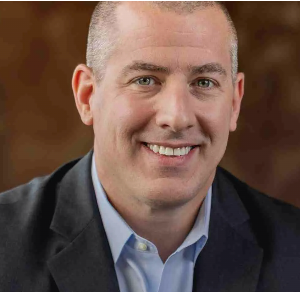
David Parker
Co-Founder at DCI
The Challenge
DCI (Development & Construction Insight, LLC) is a Construction Services Firm that provides expert guidance across the full project life cycle, from land purchase to building activation and project close-out.
The firm serves healthcare, industrial, commercial, higher education, life sciences, and non-profit sectors, with offices in Cary, NC and Indianapolis, IN.
By 2024, the market had turned against the firm. A down real estate cycle, driven by rising interest rates and inflation, was causing serious contraction in one of DCI’s core businesses, and revenue had declined 26%.
The downturn itself was outside the firm’s control. The real question was whether DCI would be positioned to capture the recovery when markets turned.
The team, systems, and processes that had carried the company to its current size were not built to scale into the next cycle, and there were gaps limiting team members from doing their best work that leadership did not have full visibility into.
- ×A down real estate cycle was contracting a core business. Interest rates and inflation drove serious contraction in one of DCI’s core markets, pulling revenue down 26%. These were macro forces that put real pressure on the firm.
- ×The firm needed to be ready for the upswing. When the market recovered, DCI would need the bandwidth, the team, and a clear road map to scale into it rather than simply ride the cycle.
- ×Performance gaps were limiting the team. There were gaps preventing team members from doing their best work, and leadership did not have full visibility into them from inside the day-to-day.
- ×No structured HR or evaluation framework existed. There were no salary bands, no staff leveling structure, no standardized hiring process, and no metrics-based system for evaluating performance.
- ×Revenue growth depended heavily on the two founders. There was no plan to reduce that dependence and no business development function to drive growth independently.
- ×There was no strategic growth plan. No documented plan for where to expand, which services to prioritize, or how to scale revenue while sustaining margins.
What ScaleUpExec Did and What Changed
ScaleUpExec’s Fractional COO, Neil Shah, embedded alongside the founders to strengthen the business through the downturn and build the foundation for the recovery.
Conducted a 30-day deep-dive operational audit
Neil spent the first 30 days examining the team, systems, and processes through structured interviews with key team members.
Our solution
- ✓The audit surfaced gaps that were limiting team members from doing their best work and that leadership did not have full visibility into.
- ✓It clarified exactly what needed to be built for the firm to scale.
Moved fast to close the gaps
After the 30-day audit, Neil rolled up his sleeves and began executing.
Our solution
- ✓Rather than delivering a report and walking away, he worked hands-on to implement changes across processes, HR, team structure, culture, and strategic planning.
Put processes in place and resolved personnel challenges
Neil supported the resolution of difficult personnel situations.
Our solution
- ✓Implemented a staff leveling structure with clear guidelines based on experience, education, and newly formed salary bands.
- ✓Developed a metrics-based scorecard so every employee knew what “good” looked like for their role, and how to prioritize their efforts.
- ✓Eventually allowed their performance to be tied into their compensation.
Built hiring infrastructure and helped add to the team
Neil created templates for hiring scorecards and interview processes.
Our solution
- ✓Sourced and vetted recruiters to support hiring, and sourced and vetted training options for leaders and staff.
- ✓Helping DCI strengthen and grow its team ahead of the recovery.
Established long-term compensation (LTC) and executive equity plans
Neil led the evaluation and implementation of long-term compensation plans and executive equity programs.
Our solution
- ✓To align senior leadership incentives with long-term company performance.
Developed a strategic plan to 2.5x revenue
Neil created a detailed strategic plan targeting 2.5x revenue growth within 8 years with sustained margins.
Our solution
- ✓The plan included analysis and recommendations for optimizing and expanding geography, service type, and industry focus.
Created a go-to-market plan to reduce founder dependence
The GTM plan outlined a path to reducing revenue dependence on the two founders.
Our solution
- ✓Hiring a business development lead, and identifying focus areas for growth.
- ✓All of this revitalized the team, aligned them around contributing to and benefiting from the company’s success, and gave DCI the bandwidth and road map to focus on scaling.
Results
26%
market-driven decline reversed
Revenue had fallen 26% in 2024 from the 2023/2022 average during a down real estate cycle, with a core business contracting due to interest rates and inflation
19%
revenue growth in 2025
First full year of engagement turned the trajectory from decline to growth as markets began to recover
51%
revenue growth trending in 2026
Growth accelerating into the second year of engagement, trending toward the best year in company history
Strategic plan to 2.5x revenue
Detailed 8-year plan with sustained margins, covering geography, service lines, and industry expansion
Metrics-based evaluation system built
Every employee now has clear expectations, priorities, and year-end evaluation criteria
Why It Worked
The downturn became a building period. Instead of waiting out the cycle, DCI used it to strengthen processes, people, and plans, so the firm captured the upswing faster and harder than the market alone would have delivered.
- ✓The audit surfaced what day-to-day operations obscured. Structured interviews with key team members revealed gaps limiting the team that leadership could not easily see from inside the business. An outside operator brought that visibility.
- ✓Diagnosis was followed immediately by execution. Neil did not hand over a report and leave. After the 30-day audit, he rolled up his sleeves and moved fast. Strategy and execution happened together.
- ✓Culture, systems, and processes were treated as growth levers. This engagement is an example of how strong culture, systems, and processes give a company the capacity to scale when the market opens up.
- ✓The strategic plan created a path beyond the founders. The GTM plan directly addressed the firm’s dependence on its two founders for revenue, creating a realistic path to scale through a BD hire and defined growth focus areas.
Conclusion
Revenue reversed from a 26% decline to 19% growth in 2025, and 2026 is trending 51% above the prior year, on track to be the best year in the company’s history.
This engagement is ongoing.
Facing a similar wall?
Grab 30 minutes with Ashish, our CEO. Dive into your bottlenecks and leave with clear steps to solve them.
Book a 30-min fit call →